


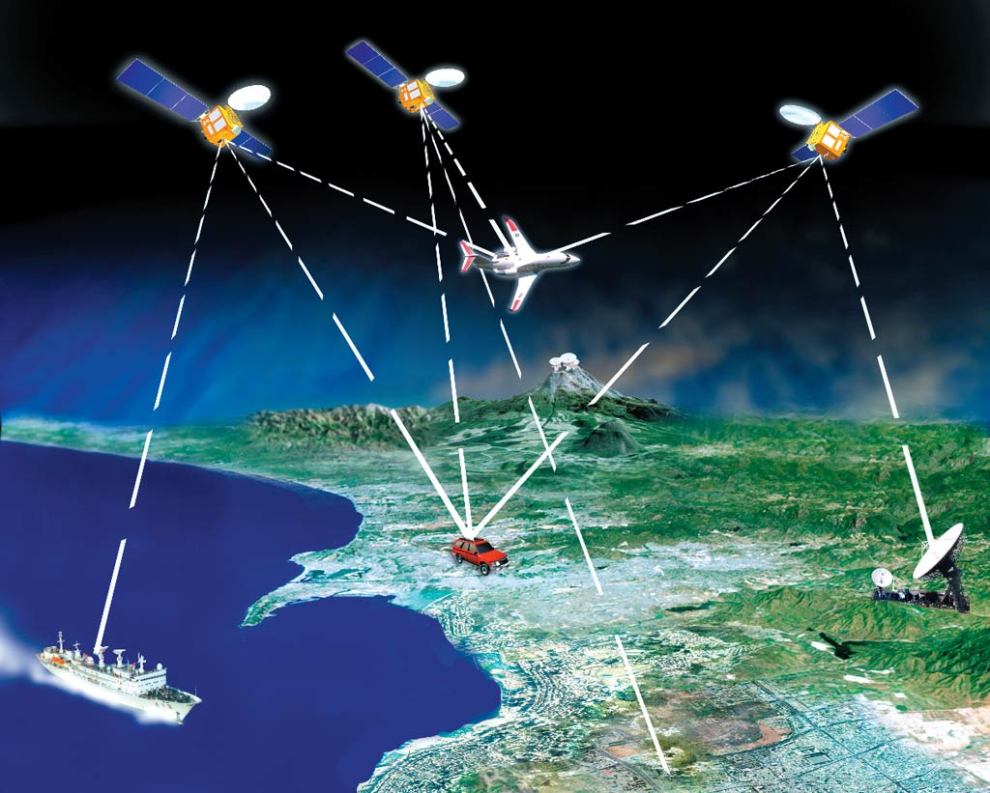
Global Navigation Satellite Systems (GNSS) are the backbone of modern positioning technology, offering accurate location data to a wide range of devices from smartphones to airplanes. To understand the intricacies of GNSS system, it’s crucial to explore the signals it sends out and the frequency bands that govern their communication. In this article, we’ll take a deep dive into GNSS signals and their frequency bands, breaking down their significance, usage, and how they impact GNSS performance.
What are GNSS Signals?
GNSS signals are electromagnetic waves transmitted from satellites that enable receivers on the ground to determine their position, velocity, and time. These signals contain crucial information about the satellite’s location, the time the signal was sent, and other data necessary for the receiver to calculate its exact position. GNSS signals are primarily used in GPS, Galileo, GLONASS, and other navigation systems that make up the global positioning infrastructure.
Key Components of GNSS Signals
GNSS signals are typically composed of:
- Carrier Wave: This is the high-frequency radio wave that carries the signal.
- Code: A unique identification code that helps the receiver determine which satellite sent the signal.
- Navigation Message: Data that includes information like satellite position, clock bias, and more.
Understanding how these components work together is essential when delving deeper into GNSS signals and their frequency bands.
GNSS Frequency Bands
The frequency bands used by GNSS systems are essential for the system’s operation. Each GNSS signal is transmitted at a specific frequency to avoid interference and allow for accurate positioning. Different GNSS systems use different frequency bands, and the combination of these bands allows for greater accuracy, reliability, and resilience to signal degradation.
1. L-Band – The Primary Band for GNSS Signals
The majority of GNSS systems operate in the L-band, ranging from 1 to 2 GHz. The L-band is divided into several sub-bands, each used by different GNSS constellations. For example, the GPS L1 frequency operates at 1575.42 MHz, while Galileo’s E1 signal operates at 1575.42 MHz as well. This range offers a good balance between signal strength, propagation properties, and resistance to interference.
GNSS Signals in the L-Band:
- GPS: L1, L2, L5
- Galileo: E1, E5a, E5b, E6
- GLONASS: L1, L2, L3
- BeiDou: B1, B2, B3
2. S-Band and C-Band – Specialized Applications
While the L-band is the primary frequency range for GNSS, other frequency bands such as the S-band (2–4 GHz) and C-band (4–8 GHz) are used in more specialized applications, including communications, radar systems, and military navigation. These bands are less common for civilian GNSS receivers but still play a significant role in military and scientific applications.
3. E-Band and Ku-Band – High-Frequency Bands for Advanced GNSS
The E-band and Ku-band (12-18 GHz) represent even higher frequencies used in certain high-precision GNSS applications. These frequencies offer very high data rates, making them suitable for advanced scientific, weather monitoring, and space-based applications. However, their usage is limited due to the challenges of signal attenuation, especially through atmospheric conditions.
How Do GNSS Signals and Frequency Bands Affect Positioning?
The frequency bands used by GNSS systems have a direct impact on the system’s performance, affecting everything from signal accuracy to reliability. Let’s examine how GNSS signals and their frequency bands affect positioning:
1. Signal Interference and Multipath Errors
One of the major challenges in GNSS is interference from various sources. The higher the frequency, the more susceptible the signal is to environmental conditions like rain, foliage, and atmospheric delays. Additionally, urban environments with tall buildings can cause multipath errors, where the signal reflects off surfaces and confuses the receiver. By using multiple frequency bands, GNSS systems can mitigate these errors, improving the reliability and accuracy of positioning.
2. Improved Accuracy with Dual-Frequency GNSS Receivers
Dual-frequency GNSS receivers are capable of receiving signals from two different frequency bands (such as L1 and L2 in GPS). This allows for a more accurate calculation of position, as the system can correct for errors caused by atmospheric delay (particularly ionospheric delay). Dual-frequency receivers are particularly valuable in high-precision applications like geodesy, surveying, and autonomous vehicle navigation.
3. Signal Penetration and Coverage
Different frequency bands also have varying abilities to penetrate obstacles. Lower frequencies, like those in the L-band, are more effective in penetrating through thick foliage or buildings, making them better suited for general outdoor navigation. Higher frequencies, on the other hand, tend to be more line-of-sight dependent and are used in more controlled or open environments.
Future of GNSS Signals and Frequency Bands
As GNSS technology continues to evolve, so too does the use of frequency bands. With the advent of newer constellations like the European Galileo system and China’s BeiDou, the global GNSS infrastructure is growing more diverse. This expansion brings opportunities for more robust positioning systems that can operate across multiple frequency bands, providing better coverage, accuracy, and resistance to interference.
Emerging Trends in GNSS Technology:
- Multi-Frequency and Multi-Constellation Receivers: The future of GNSS will see more devices capable of simultaneously tracking multiple constellations and frequencies, improving the precision and reliability of positioning data.
- Signals for the Internet of Things (IoT): As the IoT market grows, GNSS providers are working on optimizing signals to be more energy-efficient and suitable for low-power devices.
Conclusion
A deep dive into GNSS signals and their frequency bands reveals the intricate interplay between satellite technology, signal transmission, and positioning accuracy. By understanding the different frequency bands and how they affect GNSS performance, we gain a deeper appreciation for how modern navigation systems work. With continuous advancements in GNSS technology, the future promises even more precise and reliable navigation solutions for various applications around the world.